The search arbitrage landscape is experiencing unprecedented changes in 2025, and Domain Active stands as one of the premier search feed providers helping affiliates navigate this transition. As Google’s policy shifts continue to reshape the AFD (AdSense for Domains) ecosystem, understanding how to leverage Domain Active’s platform becomes crucial for sustained profitability.
Whether you’re new to search arbitrage or looking to optimize your existing AFD campaigns, this comprehensive guide will walk you through everything you need to know about Domain Active, from approval strategies to advanced optimization techniques that can help you maximize your ROI in today’s evolving market.
What is Domain Active and Why It Matters in Search Arbitrage
Domain Active is a specialized search feed provider that focuses on delivering premium domain traffic and advanced monetization solutions. Unlike many competitors who cast a wide net, Domain Active has built its reputation by working with top advertisers and networks within the digital media industry, providing arbitrageurs with access to high-quality traffic opportunities.
The company’s platform utilizes machine learning technology to drive maximum ROI for partners while offering comprehensive analytics and yield management tools that represent some of the industry’s most advanced monetization solutions. This technical sophistication, combined with their selective partnership approach, has made Domain Active a preferred choice for serious search arbitrageurs.
The AFD Model Explained
AFD (AdSense for Domains), commonly known as domain parking, represents the traditional backbone of search arbitrage. In this model, you purchase domains and register them with your search feed provider—in this case, Domain Active. Instead of hosting your own content, the network displays relevant search results with sponsored links that generate revenue when clicked.
The AFD process with Domain Active works as follows:
- Domain Registration: Purchase and register keyword-rich domains
- Integration: Connect domains to Domain Active’s monetization platform
- Traffic Direction: Send paid traffic from various sources to these parked domains
- Revenue Generation: Earn from clicks on the displayed search results and ads
Why Choose Domain Active for Your AFD Campaigns?
Premium Traffic Focus
Domain Active distinguishes itself through its unwavering focus on premium domain traffic. The company maintains strict quality standards, carefully monitoring both traffic sources and user engagement to ensure optimal experiences for both users and advertisers. This quality-first approach often translates to higher RPCs (Revenue Per Click) compared to providers who accept lower-quality traffic.
Advanced Technology Platform
The platform leverages proprietary machine learning algorithms that continuously optimize ad placements, keyword targeting, and revenue distribution. This technological edge means your campaigns can achieve better performance with less manual intervention, allowing you to scale more efficiently.
Industry Relationships
Domain Active’s partnerships with top-tier advertisers and networks provide access to premium demand sources that might not be available through other providers. These relationships often result in better fill rates and higher-paying advertisements across various verticals.
Comprehensive Analytics
The platform provides granular reporting capabilities that go beyond basic metrics. You can track performance at the domain level, analyze traffic quality indicators, and access optimization recommendations that help improve campaign performance over time.
Getting Approved with Domain Active: Strategies That Work
Understanding the Application Process
Domain Active maintains selective approval standards, focusing on partners who can deliver substantial, high-quality traffic volumes. The application process typically involves:
Initial Application: Submit basic business information and traffic projections
Traffic Source Verification: Demonstrate access to quality traffic sources
Compliance Review: Show understanding of industry regulations and best practices
Financial Verification: Provide evidence of adequate capital for sustained operations
Key Approval Factors
Traffic Quality: Domain Active prioritizes applicants who can demonstrate access to high-intent, engaged traffic rather than bulk, low-quality visitors.
Scale Potential: The platform looks for partners capable of generating meaningful volume—typically those planning to spend at least mid-four figures monthly.
Industry Experience: Previous experience in affiliate marketing, media buying, or digital advertising significantly improves approval odds.
Professional Presentation: A well-structured business plan, professional communication, and clear understanding of the search arbitrage model are essential.
Alternative Paths to Approval
Media Buyer Partnerships: If direct approval proves challenging, consider partnering with existing Domain Active affiliates as a media buyer.
Conference Networking: Industry events like Affiliate World provide opportunities to meet Domain Active representatives directly.
Referral Programs: Existing partners may be able to facilitate introductions or provide referrals.
Gradual Approach: Start with other, more accessible feed providers to build track record and experience before applying to Domain Active.
Traffic Sources That Work Best with Domain Active
Native Advertising Platforms
Taboola and Outbrain remain among the most effective traffic sources for Domain Active campaigns. These platforms offer:
- High-quality, engaged audiences
- Sophisticated targeting options
- Content-integrated ad formats that feel natural
- Robust optimization tools and reporting
Best Practices:
- Focus on curiosity-driven headlines that don’t oversell
- Use high-quality, relevant imagery
- Target lookalike audiences based on previous converters
- Implement proper tracking to optimize for RPC rather than just CTR
Social Media Advertising
Facebook/Meta Advertising provides massive scale potential, though it requires careful compliance management:
Advantages:
- Enormous audience reach and detailed targeting
- Multiple creative formats (image, video, carousel)
- Advanced optimization algorithms
- Cost-effective traffic in many geos
Considerations:
- Platform policies around search arbitrage can be restrictive
- Account stability requires careful compliance management
- Creative fatigue necessitates regular ad rotation
- Quality requirements have increased significantly
TikTok Advertising has shown strong potential, particularly for certain demographics:
Benefits:
- Engaged, younger audience
- Video-first format drives higher engagement
- Growing advertising platform with opportunities
- Potentially lower competition in some verticals
Challenges:
- Platform policies continue evolving
- Requires video creative capabilities
- Audience skews younger, limiting some verticals
Google Display Network (GDN)
Google Display Network offers unique advantages for search arbitrage:
Scale: Access to millions of websites and apps
Intent Targeting: Leverage Google’s data for precise audience targeting
Integration: Seamless integration with other Google advertising products
Optimization Strategies:
- Use manual bidding for better cost control
- Focus on placement optimization rather than broad targeting
- Implement negative placement lists aggressively
- Monitor quality metrics closely
Search Engine Marketing
Google Ads Search provides high-intent traffic, though competition is intense:
Advantages:
- Users actively searching for relevant terms
- High conversion potential
- Precise keyword targeting
Challenges:
- Higher costs due to competition
- Strict quality requirements
- Limited scale compared to display options
Optimizing Your Domain Active AFD Campaigns
Domain Strategy
Keyword-Rich Domains: Choose domains that closely match your target keywords and verticals. Generic, brandable domains often perform better than exact-match domains due to trust factors.
Domain Age and History: Older domains with clean histories typically perform better. Use tools like Wayback Machine to verify domain history.
Portfolio Diversification: Maintain multiple domains across different verticals to spread risk and identify top performers.
Keyword Research and Selection
High-Intent Keywords: Focus on keywords that indicate strong commercial intent. Terms like “reviews,” “comparison,” “best,” and “buy” often convert well.
Vertical Selection: Prioritize verticals with high advertiser demand:
- Finance and insurance
- Health and wellness
- Business services
- Technology and software
- Travel and hospitality
Competition Analysis: Use tools like SEMrush or Ahrefs to identify keywords with strong search volume but manageable competition.
Traffic Quality Management
Source Diversification: Don’t rely on a single traffic source. Spread campaigns across multiple platforms to reduce risk.
Quality Metrics: Monitor key indicators like bounce rate, time on site, and click-through rates to ensure traffic quality meets Domain Active’s standards.
Compliance Management: Maintain strict adherence to all platform policies to avoid traffic quality issues that could impact your relationship with Domain Active.
Tracking and Analytics Setup
Professional Tracking: Implement robust tracking solutions like ClickFlare, which offers direct integration with Domain Active and other major feed providers.
Key Metrics to Monitor:
- Revenue Per Click (RPC)
- Cost Per Click (CPC)
- Return on Ad Spend (ROAS)
- Click-through Rate (CTR)
- Conversion Rate
- Traffic Quality Score
Optimization Frequency: Review performance data at least daily and make optimization decisions based on statistical significance rather than small sample sizes.
Advanced Strategies for Domain Active Success
Multi-Geo Testing
Geographic Expansion: Test campaigns across multiple countries to identify markets with favorable cost-to-revenue ratios.
Localization: Adapt creatives and landing page experiences for different cultural contexts and languages.
Time Zone Optimization: Schedule campaigns to run during peak hours in target markets.
Creative Optimization
A/B Testing Framework: Continuously test ad creatives, headlines, and images to identify top performers.
Seasonal Adaptation: Adjust campaigns for seasonal trends, holidays, and industry events.
Compliance-First Approach: Ensure all creatives meet platform guidelines while remaining engaging and clickable.
Automation and Scaling
Bid Management: Use automated bidding strategies where appropriate, but maintain manual oversight for budget allocation.
Campaign Automation: Implement rules-based automation for routine optimization tasks like pausing underperforming ads or increasing budgets for winners.
Portfolio Management: Use tools like TheOptimizer or Maximizer to manage multiple campaigns across different traffic sources and feed providers simultaneously.
Understanding Google’s 2025 Policy Changes and AFD’s Future
The March 2025 Update
Google’s announcement that advertisers will be automatically opted out of serving ads on parked domains represents a significant shift in the AFD landscape. However, several factors suggest AFD isn’t disappearing overnight:
Gradual Rollout: The opt-out process is happening over several months, not all at once.
Manual Opt-In: Advertisers can manually opt back into parked domain advertising, and many will likely do so.
Industry Adaptation: Feed providers like Domain Active are adapting their strategies and exploring alternative revenue sources.
Implications for Domain Active Users
Short-Term Opportunities: While some advertisers may temporarily leave the ecosystem, this could lead to less competition and potentially higher RPCs for remaining traffic.
Quality Focus: The changes reinforce the importance of high-quality traffic, an area where Domain Active already excels.
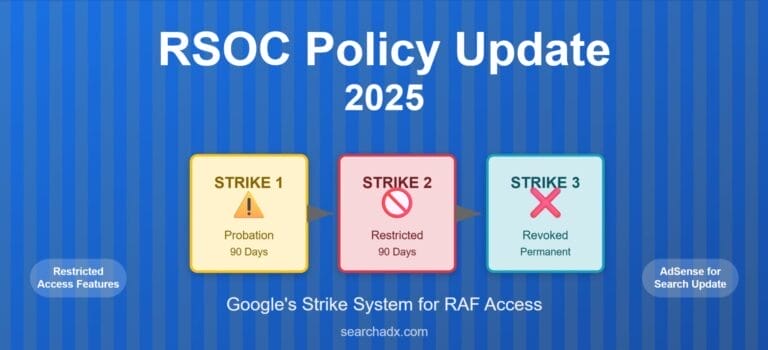
Transition Planning: Use this period to diversify revenue streams and prepare for potential shifts toward RSOC models.
RSOC Transition Considerations
While this guide focuses on AFD, it’s worth noting that Domain Active is also developing RSOC (Related Search on Content) capabilities. The transition from AFD to RSOC offers several advantages:
Better User Experience: Content-rich pages provide more value to users
Higher RPCs: RSOC often generates better revenue per click
Platform Compliance: Content pages face fewer policy restrictions
Diversified Monetization: Ability to combine search results with other revenue streams
Common Mistakes and How to Avoid Them
Traffic Quality Issues
Mistake: Sending low-quality, incentivized, or bot traffic to maximize volume.
Solution: Focus on organic, high-intent traffic even if it means lower volumes initially.
Mistake: Ignoring bounce rates and engagement metrics.
Solution: Monitor quality indicators and optimize for engagement, not just clicks.
Compliance Violations
Mistake: Using misleading ads or aggressive marketing tactics.
Solution: Maintain conservative, compliance-first creative strategies.
Mistake: Failing to understand platform-specific policies.
Solution: Stay updated on policy changes and maintain open communication with platform representatives.
Financial Management
Mistake: Inadequate cash flow management for NET 30-45 payment terms.
Solution: Maintain sufficient working capital to sustain operations during payment delays.
Mistake: Over-scaling too quickly without proper testing.
Solution: Scale gradually and base expansion decisions on consistent, profitable performance.
Technical Setup Errors
Mistake: Poor tracking implementation leading to optimization blindness.
Solution: Invest in professional tracking setup and validation.
Mistake: Neglecting domain management and maintenance.
Solution: Regularly audit domain portfolios and maintain proper DNS and hosting configurations.
Building Long-Term Success with Domain Active
Relationship Management
Account Management: Maintain regular communication with your Domain Active account manager to stay informed about opportunities and changes.
Performance Transparency: Share performance data and insights that can help Domain Active optimize their platform for mutual benefit.
Industry Engagement: Participate in industry events and communities to stay current with trends and network with other professionals.
Continuous Improvement
Testing Culture: Implement systematic testing across all campaign elements to identify improvement opportunities.
Education Investment: Stay current with industry developments through courses, conferences, and professional resources.
Technology Adoption: Evaluate and implement new tools and platforms that can provide competitive advantages.
Risk Management
Diversification: Maintain relationships with multiple feed providers and traffic sources to reduce dependency risk.
Compliance Focus: Prioritize long-term sustainability over short-term gains by maintaining strict compliance standards.
Financial Planning: Maintain appropriate reserves and financial planning for industry fluctuations.
Getting Started: Your Domain Active Action Plan
Phase 1: Preparation (Weeks 1-2)
- Research and Planning: Study Domain Active’s requirements and develop a comprehensive business plan
- Infrastructure Setup: Establish tracking systems, domain management tools, and financial structures
- Traffic Source Evaluation: Identify and prepare accounts with potential traffic sources
- Compliance Education: Thoroughly understand relevant platform policies and industry regulations
Phase 2: Application and Setup (Weeks 3-4)
- Application Submission: Submit Domain Active application with complete documentation
- Domain Acquisition: Purchase and configure initial domain portfolio
- Traffic Source Preparation: Set up and test traffic source accounts
- Tracking Implementation: Configure tracking systems and validate data flow
Phase 3: Launch and Testing (Weeks 5-8)
- Small-Scale Launch: Begin with limited budgets to test systems and processes
- Performance Monitoring: Track key metrics and identify optimization opportunities
- Creative Testing: Test multiple ad variations to identify top performers
- Quality Assurance: Ensure traffic quality meets Domain Active’s standards
Phase 4: Optimization and Scaling (Ongoing)
- Data Analysis: Regular performance reviews and optimization adjustments
- Vertical Expansion: Test new niches and geographic markets
- Scale Increase: Gradually increase budgets based on proven performance
- Relationship Development: Build stronger partnerships with all stakeholders
Industry Trends and Future Outlook
Technology Evolution
Machine Learning Integration: Advanced algorithms increasingly drive optimization and personalization
Real-Time Optimization: Faster data processing enables more responsive campaign management
Cross-Platform Attribution: Better tracking capabilities across devices and platforms
Market Consolidation
Premium Provider Focus: The industry is consolidating around high-quality providers like Domain Active
Quality Standards: Increasing emphasis on traffic quality and user experience
Compliance Requirements: Stricter adherence to platform policies and industry standards
Revenue Model Evolution
Diversified Monetization: Beyond traditional search results to include affiliate integration and content monetization
Performance-Based Partnerships: Closer alignment between affiliates and feed providers
Data-Driven Optimization: Increased use of analytics and machine learning for performance improvement
Conclusion: Maximizing Your Domain Active AFD Success
Domain Active represents one of the most sophisticated and reliable platforms in the search arbitrage ecosystem. While the AFD model faces challenges from Google’s policy changes, opportunities remain for affiliates who approach the business with professionalism, quality focus, and strategic thinking.
Key Success Factors:
- Quality Over Quantity: Prioritize high-quality traffic and user experience
- Compliance First: Maintain strict adherence to all platform policies
- Continuous Optimization: Implement systematic testing and improvement processes
- Strategic Partnerships: Build strong relationships with Domain Active and traffic sources
- Financial Management: Maintain proper cash flow and risk management practices
The search arbitrage industry continues evolving, but platforms like Domain Active provide the infrastructure and support needed for sustained success. By focusing on quality, compliance, and continuous improvement, affiliates can build profitable, sustainable businesses that weather industry changes and capitalize on new opportunities.
Whether you’re just starting your search arbitrage journey or looking to optimize existing campaigns, Domain Active offers the platform capabilities and partnership approach needed to succeed in today’s competitive landscape. The key is approaching the business with the professionalism and strategic thinking that matches the sophistication of the platform itself.
Ready to start your Domain Active journey? Focus on building quality traffic sources, implementing robust tracking, and maintaining strict compliance standards. The affiliates who invest in these fundamentals today will be best positioned for long-term success in the evolving search arbitrage landscape.